




Process Air Heating Solutions
Convection-based heating plays a critical role in industries that depend on precise temperature control and consistent heat distribution. Manufacturing plants, aerospace facilities, food processing operations, and chemical producers all rely on controlled air temperatures for drying, curing, combustion, and facility heating. Process air heating refers to the deliberate addition of heat to an air stream, and the effectiveness of this process has a direct impact on efficiency, product quality, energy costs, and overall operational reliability.
Sigma Thermal specializes in designing, engineering, and servicing advanced process air heating systems tailored to each customer’s requirements. This guide explores what process air heating is, where it is used, the technology options available, and how Sigma Thermal supports complex heating applications across industries.
- What Is Industrial Process Air Heating?
- Key Applications for Process Air Heating
- Choosing the Right System to Heat Process Air
- Process Air Heating System Comparison
- Engineered to Meet Exact Specifications
- Get a Quote for Your Process Air Heating System
- Sigma Thermal: Your Partner in Process Air Heating Excellence
What Is Industrial Process Air Heating?
Industrial process air heating involves warming an airstream to support a specific production or facility operation. Many applications require temperatures that can reach up to 1500 °F while maintaining strict uniformity and responsiveness.
Modern controls and sustainable heating methods have improved reliability and energy use across industries. These advancements allow plants to optimize heat transfer, maintain stable temperature zones, and reduce emissions. However, precision in process air heating remains essential. Here are some of the main reasons why facilities rely on consistent and repeatable performance:
- Poor temperature control creates product defects and quality issues
- Inefficient heating wastes energy and increases operating expenses
- Sensitive materials may degrade when exposed to temperature fluctuations
- Equipment lifespan decreases when exposed to thermal stress or inconsistent airflow

Key Applications for Process Air Heating
Let’s look at some of the primary applications of process air heating.
-
Combustion Air Preheating
Combustion systems operate more efficiently when incoming air is preheated using heat recovered from exhaust streams. This approach increases fuel efficiency, reduces emissions, and stabilizes burner performance.
Benefits of combustion air preheating include:
- Significant fuel savings due to reduced burner workload
- Lower thermal shock on heat exchangers and burners
- Improved equipment reliability and extended service life
- Higher overall thermal efficiency, often exceeding 93% (LHV basis)
-
Industrial Drying and Curing Ovens
Industries that rely on drying and curing need consistent temperature control to ensure product quality. These ovens are used in food processing, manufacturing, coatings, adhesive applications, composite materials, and many other production environments.
Common challenges in drying and curing applications include:
- Maintaining consistent moisture removal without over-drying products
- Ensuring uniform air distribution across trays, belts, or product surfaces
- Preventing contamination in food processing or sanitary applications
- Controlling oxygen levels when curing or processing sensitive materials
Airflow strategy also plays a critical role. Some processes benefit from horizontal airflow, while others require vertical or multi-zone configurations for optimal uniformity.
-
Plant-Wide Utility and Facility Heating
Large industrial facilities often rely on centralized utility heating systems capable of serving multiple operational zones from a single heat source. These systems support general facility heating, equipment preheating, and specialized heating processes.
Applications range from fuel-gas heating for combustion turbines to large-scale facility air distribution networks. The advantages of centralized heating include:
- Lower long-term fuel consumption compared to multiple independent heaters
- Reduced maintenance burden and fewer points of failure
- Improved temperature uniformity across widespread process areas
- Ability to distribute heat through heat-transfer fluids such as water-glycol mixtures
Combustion systems operate more efficiently when incoming air is preheated using heat recovered from exhaust streams. This approach increases fuel efficiency, reduces emissions, and stabilizes burner performance.
Benefits of combustion air preheating include:
- Significant fuel savings due to reduced burner workload
- Lower thermal shock on heat exchangers and burners
- Improved equipment reliability and extended service life
- Higher overall thermal efficiency, often exceeding 93% (LHV basis)
Industries that rely on drying and curing need consistent temperature control to ensure product quality. These ovens are used in food processing, manufacturing, coatings, adhesive applications, composite materials, and many other production environments.
Common challenges in drying and curing applications include:
- Maintaining consistent moisture removal without over-drying products
- Ensuring uniform air distribution across trays, belts, or product surfaces
- Preventing contamination in food processing or sanitary applications
- Controlling oxygen levels when curing or processing sensitive materials
Airflow strategy also plays a critical role. Some processes benefit from horizontal airflow, while others require vertical or multi-zone configurations for optimal uniformity.
Large industrial facilities often rely on centralized utility heating systems capable of serving multiple operational zones from a single heat source. These systems support general facility heating, equipment preheating, and specialized heating processes.
Applications range from fuel-gas heating for combustion turbines to large-scale facility air distribution networks. The advantages of centralized heating include:
- Lower long-term fuel consumption compared to multiple independent heaters
- Reduced maintenance burden and fewer points of failure
- Improved temperature uniformity across widespread process areas
- Ability to distribute heat through heat-transfer fluids such as water-glycol mixtures
Process Air Heating System Comparison
Each heating method aligns with different operational priorities. Key considerations include purity requirements, efficiency goals, response time, and the facility’s available utilities.
- Provide clean, contamination-free heat
- Deliver exceptional temperature stability
- Support sensitive or sanitary production environments
- Captures and utilizes recovered waste heat from exhaust streams.
- Reduces fuel consumption, leading to lower overall operating costs.
- Provides a fast response to production shifts or temperature changes.
- Features a compact design suitable for retrofits or facilities with limited space
- Offer rapid heating and high combustion efficiency
- Require lower capital investment
- Are best suited for operations with wide air quality tolerances
- Produce zero emissions at the point of use
- Enable highly precise temperature modulation
- Work well in hazardous or regulated environments
Engineered to Meet Exact Specifications
Sigma Thermal specializes in tailoring process air heating systems to meet specific operational, environmental, and performance requirements. Customization ensures the system delivers the right temperatures, airflow patterns, and reliability needed for a facility’s unique conditions.
Sigma Thermal’s collaborative approach emphasizes performance, longevity, energy efficiency, and total lifecycle value. Customized engineering may include:
- Temperature profiling for high-precision processes
- Multi-zone heating strategies for complex production lines
- Skid-mounted packages for simplified installation or relocation
- Heat-transfer loops engineered to integrate with existing utilities
- Materials and finishes selected for corrosive or high-moisture environments
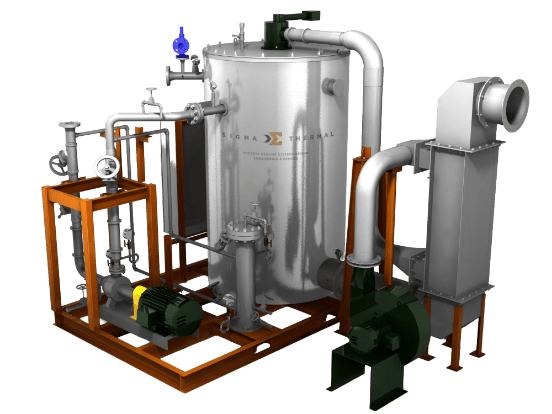
Get a Quote for Your Process Air Heating System
A successful design begins with a thorough exchange of technical details. Providing complete specifications allows Sigma Thermal’s engineering team to develop accurate heat models, size equipment correctly, and select optimal technologies.
Project requirements often include:
- Airflow rate and process temperature targets
- Inlet air conditions and desired outlet temperature accuracy
- Batch or continuous production details
- Required heating speed
- Environmental conditions and any hazardous-area classifications
- Available utilities and energy preferences
- Space constraints, installation layout, and heater orientation
- Controls integration with existing plant systems
Sigma Thermal: Your Partner in Process Air Heating Excellence
Sigma Thermal delivers process air heating systems that combine technical precision, efficiency, and long-term reliability. By offering a full spectrum of heating technologies and custom engineering support, we ensure each solution meets exact performance requirements while helping clients improve energy efficiency and reduce operating costs.
As industries continue to grow and change, Sigma Thermal remains committed to innovation, sustainability, and engineering excellence across the board. If your organization is looking for improved product quality, optimized processes, or enhanced facility heating, you will find a trusted partner in Sigma Thermal. Contact us or request a quote today for a custom process air heating solution.
Resources Center



Our Blog
Understanding Thermal Fluids & Thermal Fluid Systems
Thermal Fluid Management • Advantages of Thermal Oil Heating Systems Types of Thermal Fluid Heaters • Work With Sigma Thermal The demand for process...
READ MORE About Understanding Thermal Fluids and Thermal Fluid SystemsUnlocking Profitability With Waste Heat Recovery
Waste heat is recoverable—it can be a valuable resource. If your facility is discarding waste heat or incurring extra expenses to manage it, you...
READ MORE About Unlocking Profitability With Waste Heat Recovery