The Rise of the HC2-X Heaters as a Water Bath Alternative
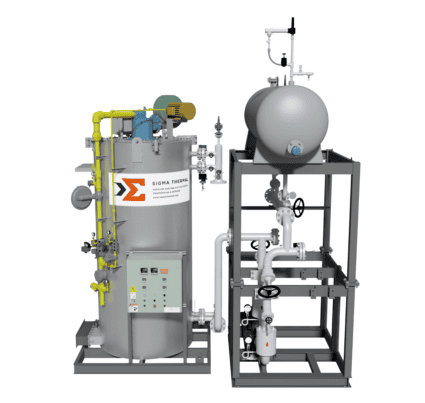
Sigma Thermal has extensive experience designing and supplying custom engineering solutions for thermal systems across a broad range of industries. Our dedicated team has the expertise needed to help customers understand the differences between a water bath heater and a water bath alternative, to determine which option best meets their specific needs. In indirect heating, a heat transfer medium, such as steam, thermal oil, or a glycol mixture, is used to heat a process gas or fluid, protecting the product from direct contact with the heating source. Process water bath heaters and their alternatives are two types of indirect heating processes. This article will compare these methods, exploring their key differences, applications, and mechanisms to help you determine the best fit for your operational requirements.
Understanding the Process Water Bath Heater
To indirectly heat process gases and liquids, water bath heaters submerge a sealed process coil into a heated bath solution.
How It Works
- A fire-tube style burner is submerged in a vessel.
- The surrounding bath solution, known as the heat transfer medium, is sufficiently heated.
- The process fluid, which flows through the submerged coil, absorbs the heat.
- Natural convection is used in lieu of circulation pumps, simplifying operation and minimizing rotating equipment.
Heat Transfer Media
- Glycol mixtures. Combined with water, these mixtures are typically used for low-temperature applications up to 250 °F.
- Molten salts. Often used to meet high-temperature requirements.
Common Applications
Water bath heaters are commonly used for the in-line heating of various gases and liquids. They are also used in the oil and gas industry, and in applications frequently exposed to harsh environmental conditions, such as:
- Amine reboilers
- Crude oil heating
- Glycol reboilers
- Natural gas heating
Primary Characteristics
Process water bath heaters are usually self-contained and highly effective for low-duty, single-use applications (<20MMBTU/hr). At Sigma Thermal, we offer design flexibility in fuel sources and coil configuration to meet our customers’ specific needs.
Exploring the Water Bath Alternative
Water bath alternatives offer a more flexible and comprehensive approach to process heating, with a smaller footprint, lower operational costs, and faster delivery. As a popular alternative to water bath heaters, our HC2-X thermal fluid heaters have a dual helical coil design. Key components of the system include:
- HC2-X heater
- Pump skid
- Control valves
- Expansion tank
- Heat exchanger
How It Works
- The thermal fluid heater warms the heat transfer medium (e.g., glycol, thermal oil).
- A pump circulates the fluid through insulated piping to presses, ovens, reactors, or other heat users.
- The fluid is then returned to the heater for reheating purposes.
Primary Advantages
- Energy source diversity. The HC2-X can be powered with multiple types of fuel.
- Flexibility. A single system can provide an adequate amount of heat to various energy users with different temperature requirements.
- Compact footprint, lighter weight. With forced circulation, HC2-X systems offer higher thermal efficiency and a smaller, optimized design compared to bulky water bath units. Because these systems require significantly less fluid volume, they also weigh much less, which reduces the complexity of foundation designs and lowers construction costs.
- Reduced costs. For smaller systems, the installed cost of a thermal fluid system is typically 10% to 20% lower than a water bath heater, and up to 50% lower for larger systems where multiple bath heaters would be required. Additionally, because HC2-X systems use up to 10 times less fluid, initial and long-term fluid maintenance costs are drastically reduced.
- Control and turndown. Unlike water bath heaters that act as slow-moving heat sinks, HC2-X heaters offer dynamic, responsive control with quick response times to temperature changes. By utilizing multiple parallel heat exchangers, process turndown can be exponentially improved, providing a level of precision that traditional bath heaters cannot match.
Broad Range of Applications
A water bath alternative becomes an option when the application’s required capacity is 10 MM BTU or higher. The versatility of water bath alternatives makes them suitable for a wide variety of uses, including:
- Power generation: natural gas performance fuel heating, turbine fuel gas conditioning
- Natural gas processing: amine reboilers, glycol reboilers
- Midstream operations: crude oil heating, pipeline terminal heating
- Indirect steam generation: primary heat source for steam generators
Thermal Fluid Heating Options for Applications* Above 10 MM BTU/Hr
| Water Bath Heater | HC2-X Heater | |
|---|---|---|
| Scope of Application | Ideal for a single, dedicated process, especially for hazardous applications like heating natural gas streams. | Designed for plant-wide utility, capable of servicing multiple, diverse heat users from one central system. |
| Operational Flexibility | Less flexible. The system is self-contained and dedicated to its single purpose. | Highly flexible. Can manage different temperatures for various processes and utilize a wide range of energy sources, including waste heat. |
| Temperature and Pressure | Can achieve high temperatures but may require specialized fluids like molten salt. Water-based systems are pressure-dependent. | Excel at providing high temperatures at very low operating pressures, offering a safer and less maintenance-intensive alternative to steam. |
| System Complexity | Relatively simple and robust self-contained units. | More complex, integrated systems that require careful engineering of components like piping, pumps, and expansion tanks to function correctly. This is where expert engineering solutions for thermal systems become critical. |
Partner With Sigma Thermal for Custom Heating Solutions
The choice between a water bath heater and an alternative depends entirely on the demands of the application. As a trusted engineering partner with deep process knowledge, Sigma Thermal is more than a supplier. We have the expertise to help our customers make a custom heating choice that meets their specific needs. Our team of experienced industry professionals analyzes the unique specifications of the application to determine whether a flexible, multi-user system or a single heat source is required. From standard packages to the highest level of customized offerings, our engineering solutions for thermal systems include harsh environment heaters and custom thermal fluid heaters. Contact us to discuss the exact specifications of your next application. You can also request a quote for a custom-designed solution that ensures efficiency, safety, and long-term success.